
How to Choose the Right Instrument for a Child

(And why age actually matters more than people think)

One of the most common questions parents ask is:
“What instrument should my child start with?”
And usually, they are expecting a very simple answer.
Piano. Violin. Drums. Flute.
But choosing an instrument is not only about interest. It’s also about timing, physical development, attention span, coordination, breathing, teeth, emotional temperament, and even confidence.
Over the years, I’ve watched children thrive on one instrument and completely freeze on another—not because they weren’t musical, but because the instrument didn’t yet match where their body and brain were developmentally.
And this is important to understand:
A child failing on an instrument too early is not the same thing as a child being untalented.
Sometimes the timing is simply wrong.
Ages 4–6: The world of movement and imagination
At this age, children are still deeply physical learners.
They learn through:
imitation
movement
rhythm
stories
play
Fine motor control is still developing, and sustained concentration is usually short. According to developmental research, many children under age 6 are still refining bilateral coordination (using both hands independently), finger strength, and sustained attention. (healthychildren.org)
This is why instruments that require extremely precise hand positions or strong embouchure control can become frustrating too early.
At this stage, children often do best with:
piano
percussion
ukulele
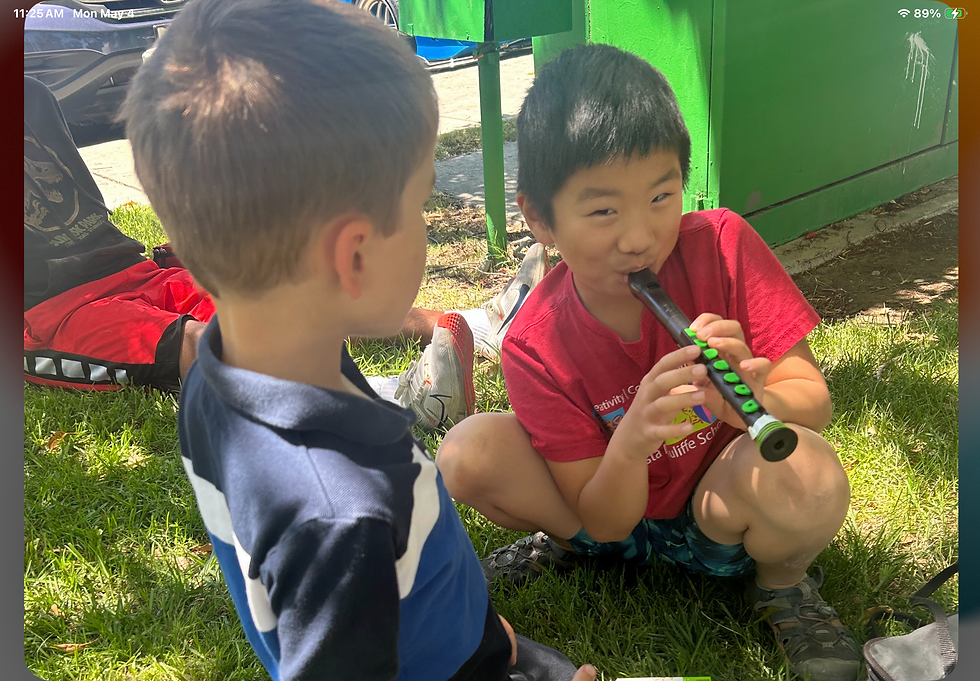
recorder
group music classes
singing and movement
Piano is especially powerful because the child can immediately produce a pleasant sound without needing advanced physical technique first.
That immediate reward matters enormously at this age.
Ages 6–8: Coordination begins catching up to curiosity
This is one of the most important windows in music education.
Children become more capable of:
following structure
reading simple notation
practicing short routines
controlling fingers independently
This is often when:
violin
guitar
drums
beginner woodwinds
begin to make more sense.
But even within the same age group, physical differences matter.
For example:
front teeth development affects flute playing
lung capacity affects sustained wind playing
hand size affects violin and guitar comfort
jaw structure can affect brass instruments
Many pediatric music educators and orthodontic studies note that embouchure-based instruments interact directly with facial muscles, teeth alignment, and breath control. (musicandhealth.co.uk)
This doesn’t mean children should avoid those instruments—it simply means timing and adaptation matter.
Ages 8–12: Identity begins to form
Something shifts around this age.
Children stop just “trying instruments” and begin identifying with them.
The instrument becomes:
social
personal
expressive
This is often the best age to begin:
flute
clarinet
saxophone
trumpet
cello
more serious violin study
because the child is emotionally and physically more ready for the frustration that comes with learning technique.
And frustration tolerance matters more than people realize.
A flute, for example, may take weeks just to make a stable sound. An impatient 5-year-old may feel defeated. A determined 10-year-old may find the challenge exciting.
Same instrument. Different developmental stage.
Teenagers: surprisingly good beginners
This surprises many parents.
Teenagers can actually progress extremely quickly.
Their advantages include:
stronger abstract thinking
longer concentration span
faster pattern recognition
better emotional understanding of music
Physically, they are also more equipped for:
larger instruments
breath support
technical endurance
And emotionally, they often connect to music much more deeply.
The downside?
Teenagers are usually more self-conscious.
Young children make mistakes freely. Teen beginners are often afraid to look “bad” while learning.
So the emotional environment becomes incredibly important.
Personality matters too
This is the part people underestimate.
Sometimes the “right” instrument has less to do with physical readiness and more to do with temperament.
For example:
highly energetic children often thrive in percussion or brass
analytical children often enjoy piano structure
emotionally expressive children may gravitate toward strings or voice
social children often bloom in ensemble instruments
And some children simply fall in love with a sound.
Honestly, that matters too.
The mistake parents often make
Parents sometimes choose instruments based on:
prestige
practicality
school band availability
what they wish they had learned
But children are not tiny adults.
The best instrument is not the one that looks most impressive.
It’s the one that creates enough success, curiosity, and connection for the child to continue.
Because consistency matters far more than starting “perfectly.”
There is no permanent decision
This may be the most important point.
Children are allowed to change.
Sometimes piano creates the musical foundation that later leads to violin. Sometimes recorder becomes flute. Sometimes choir becomes saxophone.
Early music education is not about locking a child into an identity forever.
It’s about building:
listening
coordination
confidence
emotional connection to music
The instrument itself is only part of the story.
What I usually look for
When helping a family choose an instrument, I’m usually observing:
physical comfort
attention span
emotional reaction to challenge
curiosity
sound sensitivity
confidence level
willingness to experiment
And sometimes the answer becomes obvious very quickly.
You place an instrument in a child’s hands… and they suddenly become more themselves.
That’s usually a good sign.
The real goal
The goal is not to raise a perfect musician.
The goal is to help a child develop:
focus
creativity
resilience
listening
self-expression
And ideally, a lifelong relationship with music.
The “right” instrument is simply the doorway that allows that relationship to begin.


Comments